
Dr. Hector Franco Barbosa Rhault Loponte
Postdoctoral Researcher | SUGAR Lab
Biography
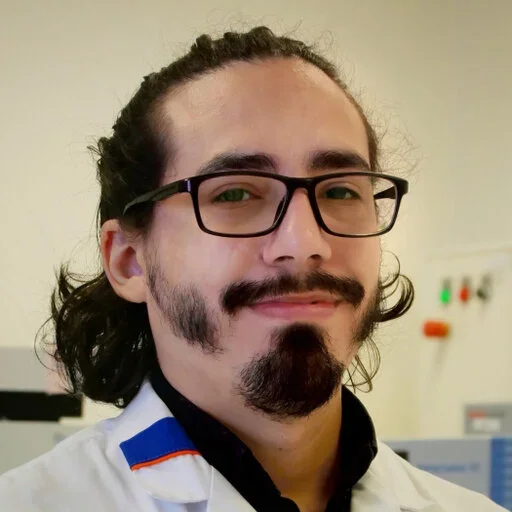
Dr. Hector Franco Barbosa Rhault Loponte is a postdoctoral researcher in the SUGAR Lab at the University of Groningen, specializing in computational glycomics, mass spectrometry data analysis, and the development of bioinformatics tools for biomedical research since 2026. He completed his PhD through an international dual-doctorate programme between the University of Groningen and the Federal University of Rio de Janeiro (UFRJ), Brazil, graduating with the distinction Cum Laude in February 2026.
His doctoral research explored the relationship between glucose metabolism, glycosylation, and cancer progression, combining experimental glycobiology, mass spectrometry, and computational approaches. During his PhD, Hector developed GlycoGenius, an open-source software platform designed to automate and streamline the identification, annotation, and quantification of glycans from complex mass spectrometry datasets. This work culminated in a first-author publication in Nature Communications in 2025.
Since joining the SUGAR Lab as a postdoctoral researcher in February 2026, he has continued expanding GlycoGenius into a more versatile and broadly applicable analytical platform. In parallel, Hector contributes to the international PerMel-AI project, which combines artificial intelligence, molecular profiling, and digital pathology to advance personalized melanoma research. His work bridges experimental analytical chemistry and computational biology, with the aim of making complex molecular information more accessible, reproducible, and biologically meaningful.
Research interests:
Glycoinformatics · Software Development · GlycoGenius · Computational Mass Spectrometry · Digital Pathology · Artificial Intelligence · Precision Oncology
Current Research
-
2026–present | Postdoctoral Researcher
SUGAR Lab, Analytical Biochemistry, University of Groningen | Computational method development for glycomics and mass spectrometry, further development of GlycoGenius, and bioinformatics research within the PerMel-AI consortium.
2023–2026 | Dual-Doctorate PhD Researcher
University of Groningen / Federal University of Rio de Janeiro | Research on glycosylation, metabolic reprogramming in cancer, mass spectrometry, and the development of computational tools for high-throughput glycomics data analysis.
Previous academic experience
Teaching and research experience at the Federal University of Rio de Janeiro, including physiology education and glycobiology research.
-
2026 | PhD, Cum Laude – Joint/Double Doctorate
University of Groningen, The Netherlands & Federal University of Rio de Janeiro (UFRJ), Brazil | Thesis: Tracing Sugar Trails: Developing Tools and Analyzing Metabolic Reprogramming in Cancer Cells under High-Glucose Stress
Master's Degree | Inflammation and Immunology
Federal University of Rio de Janeiro (UFRJ), Brazil
-
Loponte, H.F., Zheng, J., Ding, Y., Oliveira, I.A., Basse, K., Todeschini, A.R., Horvatovich, P.L., Lageveen-Kammeijer, G.S.M. GlycoGenius: a streamlined high-throughput glycan composition identification tool. Nature Communications 2025, 16, 10335. DOI: 10.1038/s41467-025-65265-2
Loponte, H.F., Oliveira, I.A., Rodrigues, B.C., Nunes-da-Fonseca, R., Mohana-Borges, R., Alisson-Silva, F., Dias, W.B., Todeschini, A.R. Hyperglycemia alters N-glycans on colon cancer cells through increased production of activated monosaccharides. Glycoconjugate Journal 2022, 39, 663–675. DOI: 10.1007/s10719-022-10057-9
Santos, R.C.M., Lucena, D.M.S., Loponte, H.F.B.R., Alisson-Silva, F., Dias, W.B., Lins, R.D., Todeschini, A.R. GM2/GM3 controls the organizational status of CD82/Met microdomains: further studies in GM2/GM3 complexation. Glycoconjugate Journal 2022, 39, 653–661. DOI: 10.1007/s10719-022-10061-z
Vasconcelos-dos-Santos, A., Loponte, H.F.B.R., Mantuano, N.R., Oliveira, I.A., de Paula, I.F., Teixeira, L.K., de-Freitas-Junior, J.C.M., Gondim, K.C., Heise, N., Mohana-Borges, R., Morgado-Díaz, J.A., Dias, W.B., Todeschini, A.R. Hyperglycemia exacerbates colon cancer malignancy through hexosamine biosynthetic pathway. Oncogenesis 2017, 6, e306. DOI: 10.1038/oncsis.2017.2
-
Xiao, R., Zheng, J., Loponte, H.F.B.R., Ding, Y., Gross-Valle, C., Derks, T.G.J., Horvatovich, P.L., Heiner-Fokkema, M.R., Bakker, B.M., Wolters, J.C., Lageveen-Kammeijer, G.S.M. Decoding the Glycan Signature: Unraveling N-Glycosylation Alterations in Glycogen Storage Disease Ia and Ib. bioRxiv 2025. DOI: 10.1101/2025.10.23.684118
-
2026 | CE Forum, Liège, Belgium | Oral Presentation
GlycoGenius for CE-MS Glycomics: Automated Annotation, Migration Time Filtering, and Reproducible Data Processing.
2026 | International Mass Spectrometry Conference (IMSC), Lyon, France | Keynote speaker
Accelerating Glycomics with GlycoGenius: Automated Annotation at Scale
-
2026 | PhD Cum Laude
University of Groningen / Federal University of Rio de Janeiro
2024 | Best Presenter – GRIP Pharmacy Day
University of Groningen
2024 | Best Poster Award – Dutch Medicines Days (FIGON)
FAPERJ Nota 10 Fellowship
Brazilian research fellowship supporting academic excellence.
-
Item description
Affiliations:
University of Groningen, SUGAR Lab, Analytical Biochemistry
Federal University of São Paulo (UNIFESP), Brazil
Research period at the SUGAR Lab:
October 2026 – June 2027
Supervision & Collaboration:
GlycoGenius: Advancing Automated Glycomics Data Analysis
Mass spectrometry-based glycomics produces highly complex datasets that require specialized computational tools for reliable glycan identification, structural annotation, and quantification. Traditionally, much of this processing has depended on manual interpretation, limiting throughput and reproducibility. To address these challenges, Hector developed GlycoGenius, an open-source platform that automates major steps in glycomics data processing.
The software provides functionality for:
Automated construction of glycan search spaces.
Identification and annotation of glycan compositions.
Scoring, filtering, and quantification of detected features.
Interpretation and annotation of MS/MS fragmentation spectra.
Visualization and quality assessment of glycomics datasets.
Analysis of multiple glycan classes, including N-glycans, O-glycans, and glycosaminoglycans.
Expanding GlycoGenius
His current postdoctoral research focuses on extending the software into a more flexible and broadly applicable computational platform. This includes further improving analytical efficiency, supporting different mass spectrometry technologies and experimental workflows, and addressing computational challenges associated with increasingly complex glycomics datasets. A particular emphasis is placed on making automated data interpretation robust, reproducible, and accessible to researchers with different levels of computational expertise.
Software: GlycoGenius on GitHub
PerMel-AI: Artificial Intelligence and Digital Pathology for Personalized Melanoma Research
Hector is involved in PerMel-AI – Utilizing AI and Large-scale Biobanking for Drug Target and Biomarker Validation in Personalized Melanoma Treatment. This international research consortium aims to improve melanoma patient stratification and identify molecular biomarkers and potential therapeutic targets by integrating large-scale proteomics, artificial intelligence, and digital pathology. The project builds on the Human Melanoma Proteome Atlas and combines molecular information with histopathological and clinical data.
Hector's work contributes computational and data-analysis expertise to this interdisciplinary research environment, including the integration and interpretation of complex molecular datasets alongside AI-assisted digital pathology approaches. An important objective is to explore how molecular profiles and tissue-level information can complement each other in characterizing melanoma heterogeneity and identifying potentially clinically relevant disease subtypes. By combining bioinformatics, computational analysis, and biomedical research, this project seeks to contribute to more precise and personalized approaches to melanoma treatment.
Glycosylation, Metabolism and Cancer
Hector's previous research investigated how metabolic conditions, particularly elevated glucose availability, influence protein glycosylation and cancer cell behaviour. His work contributed to understanding how hyperglycemia can alter glycan biosynthesis and the molecular composition of glycans expressed by cancer cells. By combining experimental glycobiology, mass spectrometry and computational analysis, these investigations highlighted the importance of studying glycosylation as a molecular connection between cellular metabolism and disease progression. This background continues to inform his computational research and the development of biologically meaningful analytical tools.
University of Groningen
Dr. Guinevere Lageveen-Kammeijer
Prof. Dr. Peter L. Horvatovich
Federal University of São Paulo
Dr. Kil Sun Lee
Funding
CAPES, Brazil
Links
Google Scholar: [Add link]
ORCID: [Add link]
LinkedIn: [Add link]