
Gabriel Trigo Pereira
PhD Candidate | International Dual-Doctorate Researcher
Biography
Gabriel Trigo Pereira is a Brazilian PhD researcher pursuing an international dual-doctorate trajectory between the Federal University of São Paulo (UNIFESP) and the University of Groningen. His research focuses on understanding the molecular mechanisms underlying cognitive decline and dementia, with particular attention to the role of protein post-translational modifications and their potential as disease-associated molecular signatures.
As part of his PhD project, Gabriel combines proteomics and glycoproteomics with clinical and lifestyle-related information to investigate molecular changes associated with cognitive impairment. He joined the SUGAR Lab in October 2026 to expand his expertise in advanced mass spectrometry-based glycoproteomics, focusing on analytical method development and the characterization of glycosylated proteins in complex biological samples.
Through this international collaboration, Gabriel aims to connect advanced analytical chemistry with clinically relevant questions in neurodegenerative disease research.
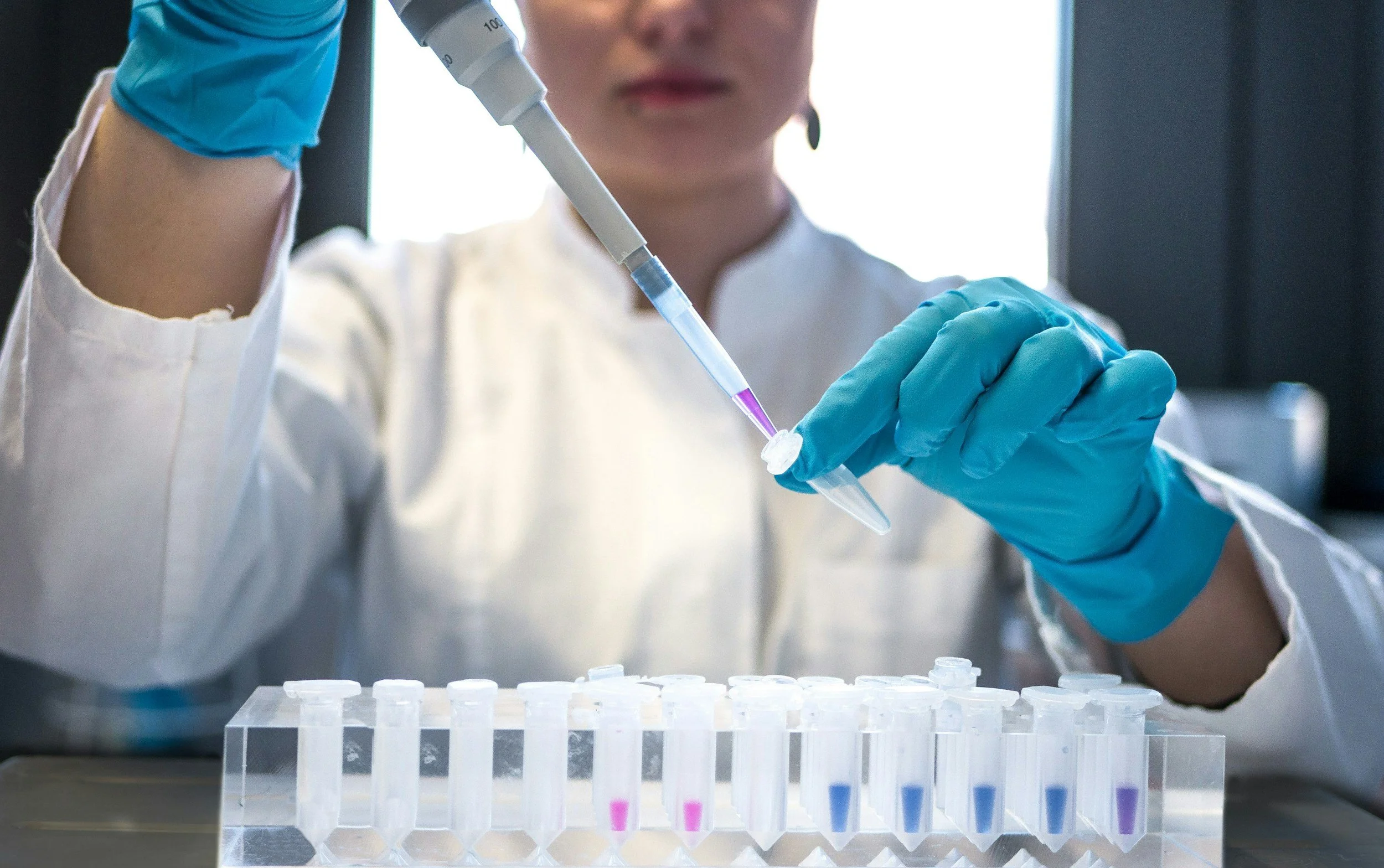
Research interests:
Glycoproteomics · Neurodegeneration · Biomarker Discovery · Mass Spectrometry · Multi-omics
Current Research
-
Loponte, H.F., Zheng, J., Ding, Y., Oliveira, I.A., Basse, K., Todeschini, A.R., Horvatovich, P.L., Lageveen-Kammeijer, G.S.M. GlycoGenius: a streamlined high-throughput glycan composition identification tool. Nature Communications 2025, 16, 10335. DOI: 10.1038/s41467-025-65265-2
Loponte, H.F., Oliveira, I.A., Rodrigues, B.C., Nunes-da-Fonseca, R., Mohana-Borges, R., Alisson-Silva, F., Dias, W.B., Todeschini, A.R. Hyperglycemia alters N-glycans on colon cancer cells through increased production of activated monosaccharides. Glycoconjugate Journal 2022, 39, 663–675. DOI: 10.1007/s10719-022-10057-9
Santos, R.C.M., Lucena, D.M.S., Loponte, H.F.B.R., Alisson-Silva, F., Dias, W.B., Lins, R.D., Todeschini, A.R. GM2/GM3 controls the organizational status of CD82/Met microdomains: further studies in GM2/GM3 complexation. Glycoconjugate Journal 2022, 39, 653–661. DOI: 10.1007/s10719-022-10061-z
Vasconcelos-dos-Santos, A., Loponte, H.F.B.R., Mantuano, N.R., Oliveira, I.A., de Paula, I.F., Teixeira, L.K., de-Freitas-Junior, J.C.M., Gondim, K.C., Heise, N., Mohana-Borges, R., Morgado-Díaz, J.A., Dias, W.B., Todeschini, A.R. Hyperglycemia exacerbates colon cancer malignancy through hexosamine biosynthetic pathway. Oncogenesis 2017, 6, e306. DOI: 10.1038/oncsis.2017.2
-
Xiao, R., Zheng, J., Loponte, H.F.B.R., Ding, Y., Gross-Valle, C., Derks, T.G.J., Horvatovich, P.L., Heiner-Fokkema, M.R., Bakker, B.M., Wolters, J.C., Lageveen-Kammeijer, G.S.M. Decoding the Glycan Signature: Unraveling N-Glycosylation Alterations in Glycogen Storage Disease Ia and Ib. bioRxiv 2025. DOI: 10.1101/2025.10.23.684118
-
Item description
-
Item description
-
Item description
Affiliations:
University of Groningen, SUGAR Lab, Analytical Biochemistry
Federal University of São Paulo (UNIFESP), Brazil
Research period at the SUGAR Lab:
October 2026 – June 2027
Supervision & Collaboration:
Characterization of Plasma and CSF Glycoproteomic Signatures Associated with Cognitive Decline and Modifiable Risk Factors
Can changes in protein glycosylation help us better understand cognitive decline and its underlying molecular mechanisms?
Dementia encompasses several conditions characterized by progressive cognitive impairment. Although considerable progress has been made in identifying disease-associated proteins and genetic risk factors, many molecular mechanisms underlying cognitive decline remain incompletely understood. In particular, protein glycosylation represents an important but still relatively unexplored layer of molecular information. Gabriel's research investigates the proteomic and glycoproteomic profiles of blood plasma and cerebrospinal fluid (CSF) from participants in the Brazilian BioAz cohort, a longitudinal study involving older adults with memory complaints. By integrating information on protein abundance and glycosylation with clinical assessments and modifiable risk factors, such as metabolic and lifestyle-related conditions, the project aims to identify molecular patterns associated with cognitive decline.
Research Approach
A central objective of Gabriel's research period at the University of Groningen is the development and optimization of a sensitive and reproducible LC-MS-based glycoproteomics workflow.
This includes:
Sample preparation: Optimizing workflows for complex biological fluids, including strategies to reduce interference from highly abundant plasma proteins.
Glycopeptide enrichment: Developing methods to improve the detection of low-abundance glycosylated peptides.
LC-MS/MS analysis: Applying high-resolution mass spectrometry to characterize glycoproteins and their glycosylation patterns.
Data interpretation: Establishing computational approaches for the identification and comparison of glycopeptides across biological samples.
Multi-omics integration: Combining glycoproteomics with global proteomics, clinical information, and other molecular datasets.
The optimized methods will subsequently support investigations of the BioAz cohort in Brazil.
Scientific Relevance
By extending conventional proteomics towards the characterization of protein glycosylation, this research aims to reveal molecular information that cannot be captured from protein abundance measurements alone. Ultimately, the project seeks to contribute to a more comprehensive understanding of the biological pathways associated with cognitive impairment and the influence of modifiable dementia risk factors.
University of Groningen
Dr. Guinevere Lageveen-Kammeijer
Prof. Dr. Peter L. Horvatovich
Federal University of São Paulo
Dr. Kil Sun Lee
Funding
CAPES, Brazil
Links
Google Scholar: [Add link]
ORCID: [Add link]
LinkedIn: [Add link]