Request measurements
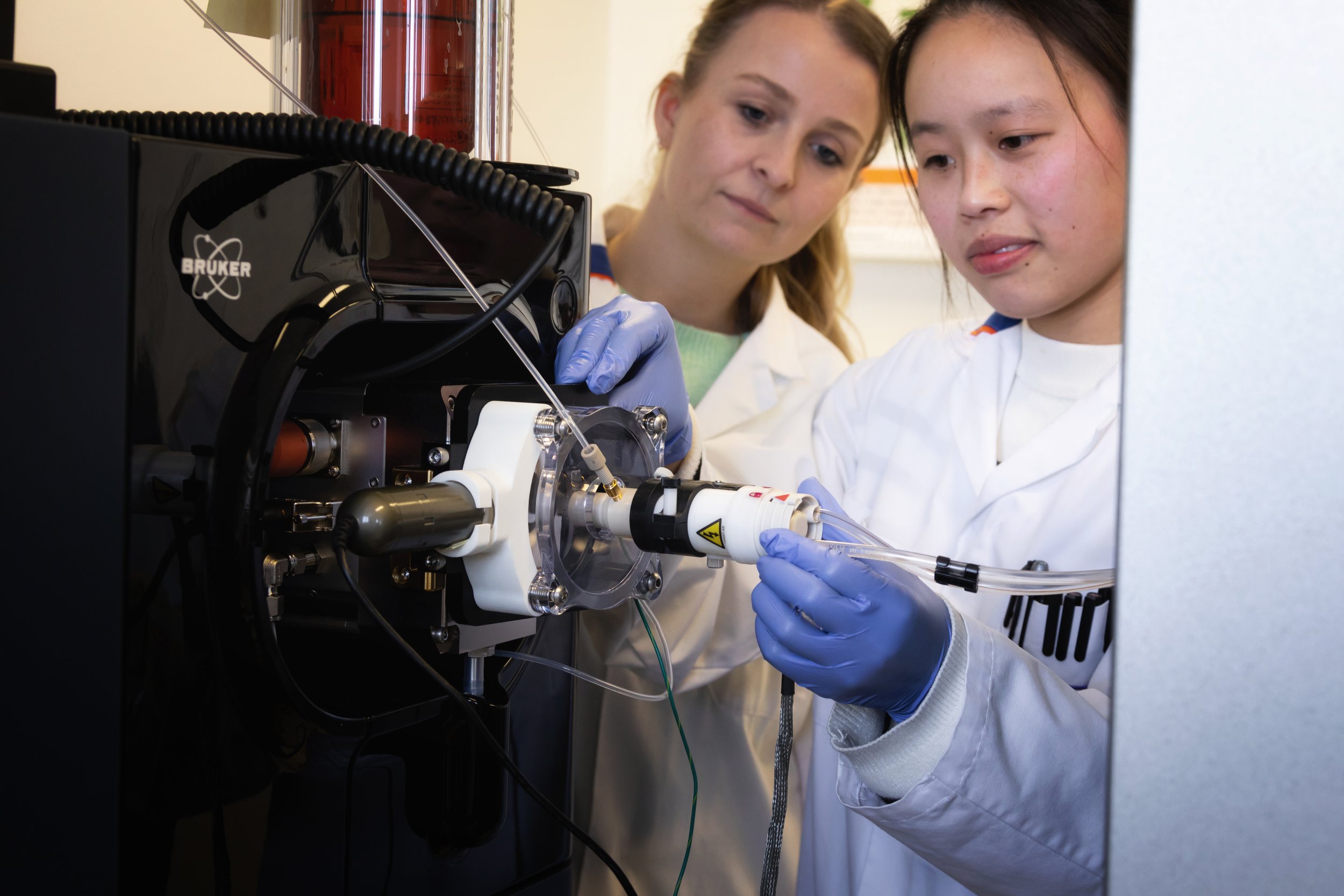
Need high-sensitivity glyco(proteo)mics data from limited material or complex biological matrices? We offer measurement services using workflows built around CE–MS and complementary MS strategies, delivering interpretable outputs with clear QC.
We support projects ranging from exploratory profiling to targeted assays. Typical measurement types include:
Glycomics: released glycans; composition/structure-oriented profiling
Glycoproteomics / glycopeptides: site-specific glycosylation where applicable
Targeted protein-of-interest assays: enrichment + glycoform/proteoform-focused readouts
Multi-layer profiling: combining readouts when it strengthens interpretation
What we can measure
We work across biological matrices, including:
Cell culture / cell-derived material
Biofluids (e.g., plasma/serum; other matrices depending on question)
Tissue-derived material (case-dependent; often requires discussion first)
Purified proteins or enriched fractions (ideal for targeted assays)
If you are unsure whether your sample type is suitable, send a short description and we will, where possible, advise the best route.
Sample types we work with
A typical measurement request includes:
Results tables: identified glycans/glycopeptides/features with annotations
QC summary: controls, reproducibility metrics where applicable, batch notes
Plots/figures: suitable for reports and presentations
Methods summary: you can cite in internal documentation and manuscripts
Optional: raw data transfer and/or a short interpretation call
What you receive (deliverables)

How the process works
Intake & feasibility
You send a short description of your question, sample type, scale, and timeline.Proposal
We recommend a workflow (readout + platform), confirm requirements, and outline deliverables.Sample submission
We provide handling/shipping instructions to preserve glycosylation integrity.Measurement & QC
We run the agreed workflow with appropriate controls.Reporting
You receive a report package and results tables; interpretation support if requested.
What we need from you
A short intake conversation
Your question, sample type, cohort/scale, and timeline.Choose the right readout
Glycomics vs glycoproteomics vs targeted protein-of-interest assays; which platform fits the sample and biological aim.Agree on deliverables
QC approach, reporting format, milestones, and next-step plan (e.g., follow-up targeted assay, validation, or publication strategy).
Notes on quality and limitations
Success depends on sample amount, matrix complexity, and study design.
For cohort-style studies, we strongly recommend including controls and QC samples.
Some questions require a short feasibility step before full-scale measurement.
If you need clinical-grade validation, we can discuss what is feasible within research settings.
Prefer a scientific collaboration instead?
If your project involves joint study design, biological interpretation, and publication planning, you may be better served by a collaboration.
Use the intake form or email us with the details above.
Ready to start?
As a rough guide, measurement-only projects start at ~€100 per sample per glycan class. Larger cohorts benefit from economies of scale, so the per-sample price typically decreases with volume and with streamlined, standardized workflows. We’ll provide a quote after a short intake based on sample type, number of samples, and the requested readout(s).
For exploratory projects, we often recommend a small pilot first to confirm feasibility and optimize the workflow.
Typical cost